𝘈𝘱𝘱𝘳𝘰𝘹 𝘳𝘦𝘢𝘥 𝘵𝘪𝘮𝘦: 3 𝘮𝘪𝘯𝘴🕒
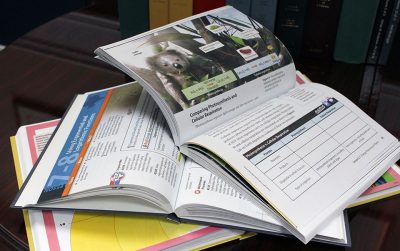
Large print refers to text that has been formatted in a significantly larger font size than standard printed materials, making it easier to read for people with low vision.
It's important to know that technically, there is no single universal font size that defines “large print”, but UK accessibility guidance commonly refers to text sized between 16 and 18 point or above, depending on the audience’s needs and the typeface used.
The Royal National Institute of Blind People (RNIB) notes that many partially sighted people prefer print sizes of at least 16 point, though some may require 18 point or larger.
Effective large print design also considers:
-
Clear typefaces
-
Strong contrast between text and background
-
Increased line spacing
-
Simplified layouts
-
Avoidance of dense blocks of text
Who uses Large Print?
Large print is primarily used by individuals with low vision.
According to RNIB, there are over two million people in the UK living with sight loss, and many retain some usable vision.
For these individuals, large print materials can significantly improve access to information without requiring alternative formats such as braille or audio.
It is also important to recognise that being blind or visually impaired does not automatically mean a person uses braille. Many individuals rely on large print, screen magnification software or digital accessibility tools instead.
Read more about braille in one of our latest blogs.
Large print is commonly requested in sectors including:
-
Healthcare
-
Local government
-
Housing associations
-
Financial services
-
Education
In many cases, it also forms part of a wider accessible communications strategy.
UK legal responsibilities
Under the Equality Act 2010, organisations have a duty to make reasonable adjustments to ensure disabled people are not placed at a substantial disadvantage when accessing services or information.
Providing information in large print can constitute a reasonable adjustment where perhaps a person’s visual impairment makes standard print inaccessible.
UK Government guidance on inclusive communication explicitly references large print as a recognised accessible format that organisations should consider when responding to individual needs.
In healthcare settings, the NHS Accessible Information Standard (AIS) requires organisations to identify and meet communication needs, including the provision of large print where appropriate.
An example we like to give in terms of optional large print is on your website, you may want to add a tagline under a contact form that users can request to receive alternative formats. If a user requests say large print or a colour contrast leaflet or rate card, you then make a business decision on if you are going to supply this document.
What changes from standard print to large print?
Converting documents from standard print to large print is not as simple as just enlarging a PDF.
Effective large print adaptation needs to also involve:
-
Redesigning page layouts to prevent crowding
-
Adjusting line spacing and margins
-
Removing decorative fonts
-
Reformatting tables and charts
-
Simplifying complex page structures
In some cases, documents require professional Desktop Publishing (DTP) to ensure that readability is preserved while maintaining brand consistency.
Supporting accessible communication
Large print remains one of the most practical and widely requested accessible formats in the UK. When implemented properly, it supports independence and equal access to information.
Large print is a structured process that should align with quality assurance, document control and compliance frameworks.
Since 2006, Wolfestone has supported organisations with ISO-certified language and accessible document services. Our dedicated account management approach ensures accessible materials, such as large print, are produced accurately, securely and in line with recognised standards.
If you require large print services as part of your accessibility strategy, we can provide a free consultation and quote to support your requirements.
𝘒𝘦𝘪𝘳𝘢𝘯 𝘩𝘢𝘴 𝘣𝘦𝘦𝘯 𝘸𝘳𝘪𝘵𝘪𝘯𝘨 𝘢𝘣𝘰𝘶𝘵 𝘭𝘢𝘯𝘨𝘶𝘢𝘨𝘦 𝘴𝘰𝘭𝘶𝘵𝘪𝘰𝘯𝘴 𝘴𝘪𝘯𝘤𝘦 2021 𝘢𝘯𝘥 𝘪𝘴 𝘤𝘰𝘮𝘮𝘪𝘵𝘵𝘦𝘥 𝘵𝘰 𝘩𝘦𝘭𝘱𝘪𝘯𝘨 𝘣𝘳𝘢𝘯𝘥𝘴 𝘨𝘰 𝘨𝘭𝘰𝘣𝘢𝘭 𝘢𝘯𝘥 𝘮𝘢𝘳𝘬𝘦𝘵 𝘴𝘮𝘢𝘳𝘵. 𝘏𝘦 𝘪𝘴 𝘯𝘰𝘸 𝘵𝘩𝘦 𝘏𝘦𝘢𝘥 𝘰𝘧 𝘔𝘢𝘳𝘬𝘦𝘵𝘪𝘯𝘨 𝘢𝘯𝘥 𝘰𝘷𝘦𝘳𝘴𝘦𝘦𝘴 𝘢𝘭𝘭 𝘰𝘧 𝘰𝘶𝘳 𝘤𝘰𝘯𝘵𝘦𝘯𝘵 𝘵𝘰 𝘦𝘯𝘴𝘶𝘳𝘦 𝘸𝘦 𝘱𝘳𝘰𝘷𝘪𝘥𝘦 𝘷𝘢𝘭𝘶𝘢𝘣𝘭𝘦, 𝘶𝘴𝘦𝘧𝘶𝘭 𝘤𝘰𝘯𝘵𝘦𝘯𝘵 𝘵𝘰 𝘢𝘶𝘥𝘪𝘦𝘯𝘤𝘦𝘴.